
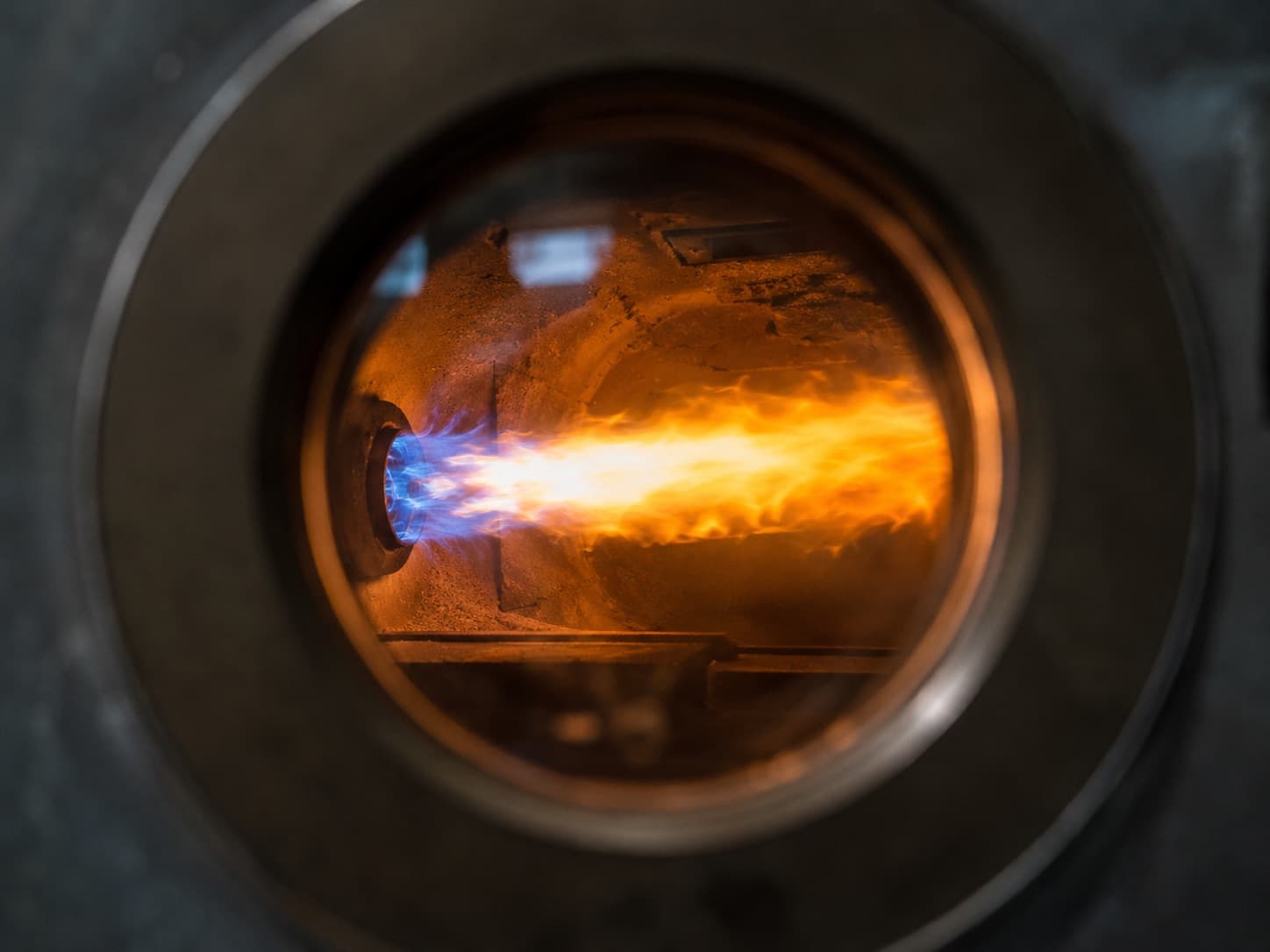
A dual-fuel burner is a unit that can run on both gas and liquid fuel within the same burner body, switching between the two. The point of it is to keep a site's heating or process demand met on liquid fuel if the gas network is interrupted, maintaining uninterrupted operation. That redundancy comes with additional cost and more complex maintenance — so it makes sense for sites with a particular risk profile, not for every site.
How does a dual-fuel burner work?
A dual-fuel burner has two separate fuel lines — one for gas, one for liquid fuel (gas oil or heavy fuel oil). Under normal conditions the burner runs on its primary fuel (usually natural gas); when gas pressure drops or supply is interrupted, an automatic or manual mechanism switches it over to the liquid fuel line.
The critical point: each fuel requires its own combustion setting. A setting optimised for gas will not deliver the same efficiency on liquid fuel — as covered in our flue gas analysis guide, each fuel has a different theoretical maximum CO₂ and needs its own measurement and setting.
Which sites should choose one?
- Hospitals: sites where a loss of heating or hot water directly affects patient safety — see our hotel and hospital maintenance guide.
- Hotels: sites with low tolerance for an interruption to guest comfort.
- Critical manufacturing plants: sites where stopping process heating could cause production loss and potential quality issues.
- Areas with elevated gas supply risk: regions where network reliability varies, or natural gas supply can be subject to seasonal restriction.
Genuine advantages and drawbacks
| Advantage | Drawback | |
|---|---|---|
| Redundancy | Uninterrupted operation on a gas outage | — |
| Investment cost | — | Two separate fuel line installations mean higher upfront cost than a single-fuel system |
| Maintenance | — | Requires separate setting and inspection for each fuel, raising maintenance time and cost |
| Space requirement | — | A storage tank footprint is needed for the liquid fuel side |
| Flexibility | Option to switch fuel during price fluctuations | — |
Switchover mechanism: automatic or manual?
- Automatic switchover: the burner switches to liquid fuel without human intervention once gas pressure drops below a set threshold. Preferred at sites with low tolerance for downtime.
- Manual switchover: switching is carried out by hand by authorised personnel. This can be adequate at less critical sites, but response time depends on staff being present at the time.
At critical sites, regularly testing the automatic switchover mechanism is the only way to be sure the system will actually behave as expected during a real outage.
What to watch in maintenance
- Both fuel lines need separate scheduled maintenance — see our maintenance frequency guide
- The liquid fuel side needs regular checking even when not in use (a fuel line left idle for a long period risks filter blockage or contamination)
- A function test of the switchover mechanism — confirming it actually works, not just that it's present
- Separate flue gas measurement and combustion setting records for each fuel
Frequently Asked Questions
Is a dual-fuel burner suitable for every site?
No. Because it adds investment and maintenance cost, it is generally chosen for sites with low tolerance for downtime — hospitals, hotels and critical manufacturing plants.
How does the switchover work on a dual-fuel burner?
On automatic systems, the burner switches to liquid fuel without human intervention once gas pressure drops below a set threshold. On manual systems, switching is carried out by hand by authorised personnel.
Is one combustion setting enough on a dual-fuel burner?
No. Each fuel needs its own combustion setting and its own flue gas measurement; a single setting cannot deliver efficient combustion on both fuels.
Does the liquid fuel side still need maintenance if it's never used?
Yes. A fuel line left idle for a long time can develop filter blockage or contamination — a backup system that fails to engage during a real outage doesn't serve its purpose. ---
About Beray Enerji
Beray Enerji is an Istanbul-based burner service company operating across Türkiye, with primary coverage in the Marmara, Thrace and Aegean regions. We provide sales, maintenance and fault response for dual-fuel burners, including separate combustion setting for each fuel, switchover mechanism testing and scheduled maintenance, backed by a technical team with 30 years of field experience. To assess your redundancy needs, contact us on +90 (000) 000 00 00 or at info@berayenerji.com.
Related services: Burner maintenance · Burner repair service · Contact
References
- EN 676 — Automatic forced draught burners for gaseous fuels
- EN 267 — Automatic forced draught burners for liquid fuels