
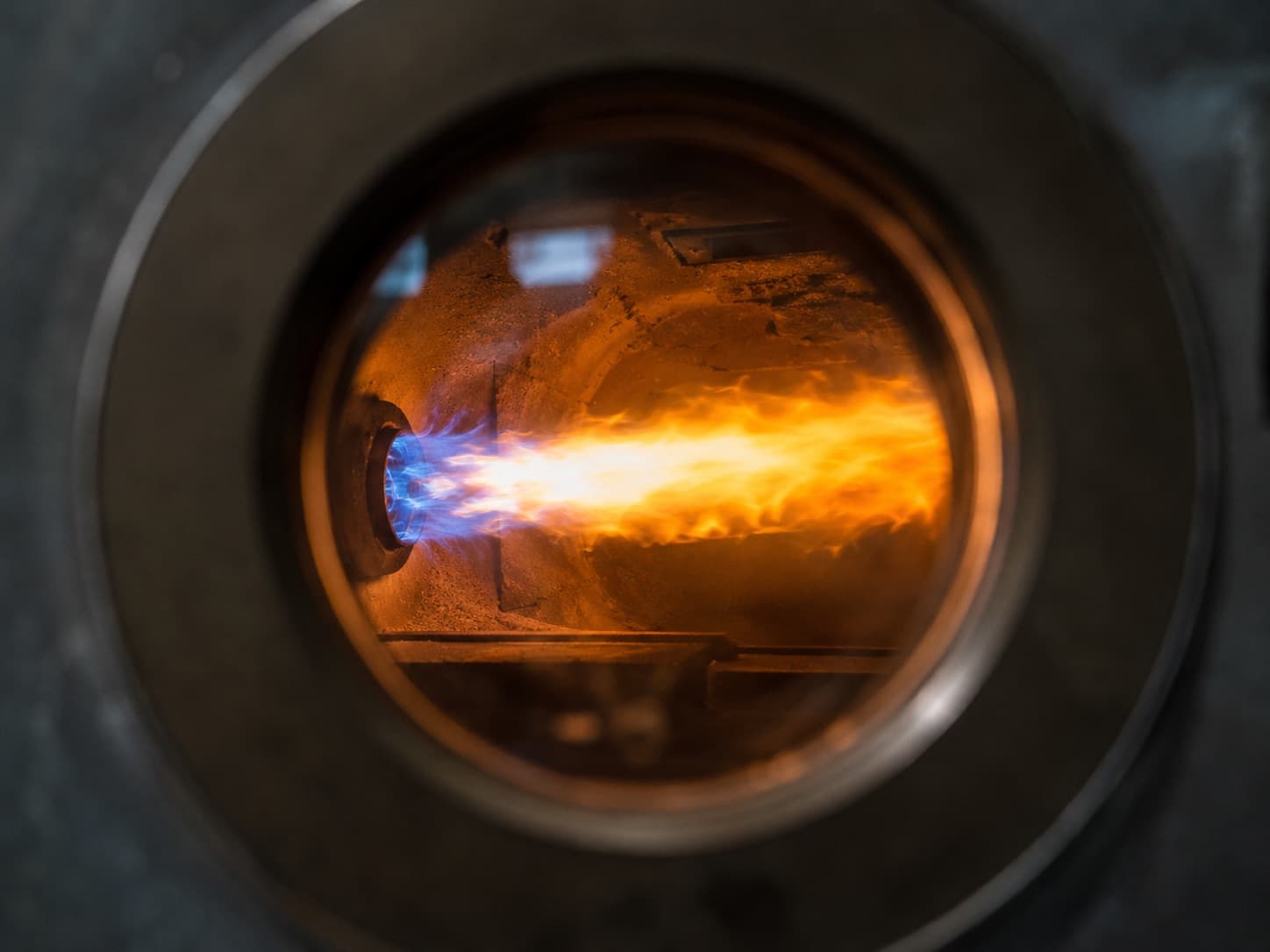
For residential and shared-block plant rooms in Türkiye, burner maintenance must be carried out at least once a year, before the heating season starts. This is the legal minimum set by Turkish regulation for installations above 30 kW on gas and above 15 kW on liquid or solid fuel. For hotels, hospitals and industrial steam plants — high-duty, high-criticality sites — industry practice tightens this to every 3–6 months.
Why burner maintenance is a legal requirement, not a preference
This is not discretionary. Under the Turkish Regulation on Control of Air Pollution from Heating (Isınmadan Kaynaklanan Hava Kirliliğinin Kontrolü Yönetmeliği, Article 17):
Owners or operators of combustion installations with a heat output above 15 kW on solid or liquid fuel, or above 30 kW on gaseous fuel, must have the installation's maintenance, repair, flue cleaning and flue gas measurements carried out once a year by a person or company holding the relevant authorisation.
In practice this covers almost every burner in a shared residential plant room — the 30 kW threshold sits below even a mid-sized combi boiler. The obligation rests with the site owner or operator; skipping it carries both a safety risk and a regulatory enforcement risk.
Note for international readers: this specific regulation applies in Türkiye. If your installation is in another jurisdiction, check the equivalent local requirement — for example the Gas Safety (Installation and Use) Regulations and F-Gas rules in the UK.
5 factors that determine the real-world interval
The legal minimum is once a year, but the appropriate interval for a given site depends on five factors:
- Run hours. A residential boiler firing for a few months a year cannot be serviced on the same schedule as a hotel or hospital boiler running 24/7, 12 months a year.
- Site criticality. A loss of heating directly affects patient safety in a hospital, guest comfort in a hotel, and process continuity in a manufacturing plant. Higher criticality means a shorter interval.
- Environmental conditions. Coastal sites see accelerated corrosion from salt-laden air; dusty or dirty workshop environments clog filters and fan impellers faster. This is particularly relevant along the Aegean and Marmara coastlines.
- Fuel type. Nozzles, pumps and filters on oil and heavy fuel oil burners foul considerably faster than on gas burners, which naturally shortens the maintenance interval.
- Capacity and pressure class. Steam boilers are pressure vessels and fall under a separate, stricter inspection regime (see below).
Recommended maintenance interval by site type
| Site type | Legal minimum | Industry-recommended interval | Rationale |
|---|---|---|---|
| Residential / shared-block plant room (seasonal use) | Annual | Annual, before the season | Limited run hours |
| Commercial building, office, shopping centre | Annual | Annual to twice-yearly | Moderate use |
| Hotel | Annual | Every 3–4 months | 24/7 hot water plus heating load |
| Hospital | Annual | Every 3 months | Continuous operation requirement, high risk |
| Manufacturing plant (process heating) | Annual | Aligned with production schedule, typically every 3–6 months | Continuous load, high cost of downtime |
| Industrial steam boiler | Annual (statutory inspection) | Per manufacturer's plan, typically every 3–6 months | Pressure vessel plus high-capacity combustion system |
| Oil / heavy fuel oil burner (any site type) | Annual | One step more frequent than the equivalent gas burner | Nozzle, pump and filter fouling |
This table is a starting point. The precise interval should be confirmed against the burner manufacturer's service manual and the site's actual duty profile.
Steam boilers and pressure vessels follow a separate rule
Two distinct processes are often conflated here:
- Burner maintenance: combustion adjustment, electrode/nozzle cleaning, filter replacement — carried out by the burner technical service.
- Periodic inspection (pressure vessel examination): examination of the boiler shell, pressure rating and safety fittings — required annually under the Turkish Regulation on Health and Safety Conditions in the Use of Work Equipment (Annex-3, Table-1), and carried out by an authorised mechanical engineer or technician.
On sites with a steam boiler, both processes are mandatory and are usually coordinated on the same visit — but neither replaces the other. Completing a burner service does not mean the boiler has passed its periodic inspection.
Burner maintenance checklist
The list below summarises what a standard periodic burner service checks, in sequence. The order mirrors the burner ignition sequence — each step confirms the one before it is sound.
1. Visual and mechanical inspection
- Burner housing, boiler mounting flange and gasket integrity
- Fan impeller and intake grille for dirt build-up
- Diffuser position and wear condition
- Vibration and unusual noise (an early sign of bearing wear)
2. Ignition and electrical system
- Ignition electrode gap, angle and condition of the ceramic insulator
- Ignition transformer output voltage and condition of the HT lead
- Cleaning and signal measurement of the ionisation probe (or photocell/UV cell on oil burners), measured with a microammeter
- Tightness of electrical connections and continuity of the earth bond
3. Fuel line inspection
- Gas burner: gas filter, regulator setting, tightness test of the safety shut-off valves, gas and air pressure switch settings
- Oil burner: fuel filter, pump pressure, nozzle condition (wear/blockage), check for air ingress in the fuel line
- Dual-fuel burner: both lines checked separately
4. Combustion setting and flue gas measurement
- O₂, CO₂, CO and flue gas temperature measured with a calibrated analyser across every firing rate
- Fuel–air ratio adjusted to the manufacturer's target values
- Smoke number (Bacharach) measured on oil burners
For the full measurement procedure, see flue gas analysis and fuel savings.
5. Safety chain test
- Fuel cut-off time on flame loss is tested
- The burner is confirmed to lock out if the air pressure switch fails
- Function test of the valve proving system (VPS), where fitted
- Confirmation that the emergency stop is operational
6. Record and report
- Measurement results (O₂, CO₂, CO, temperature) logged with date and signature
- Results compared against the previous service — a sudden rise in CO or drop in efficiency is an early warning sign of the next fault
Safety notice: this checklist is provided for information and is not an instruction for independent intervention. All work on the gas train, electrical panel and safety chain must be carried out by trained and authorised technical personnel only.
What happens if maintenance is skipped?
- Efficiency loss accumulates. A dirty fan impeller or a leaking filter can raise fuel consumption by 5–15% over a few months without any obvious cause — the bill rises, but the reason is invisible.
- Fault frequency increases. Most of the 7 most common burner faults stem from wear and fouling that scheduled maintenance would have caught.
- Warranty and insurance exposure. Manufacturers typically tie warranty cover to a maintenance record, and plant insurance policies can carry similar conditions.
- Regulatory exposure. Failing to meet the statutory annual maintenance/measurement obligation can result in enforcement action if inspected.
- The most serious risk is safety. On a burner whose safety chain has not been tested, a fault can develop unnoticed into a genuine hazard.
Maintenance contract or one-off service?
| One-off service | Annual maintenance contract | |
|---|---|---|
| Scheduling | Depends on you tracking it | Interval tracked automatically |
| Cost predictability | Variable | Fixed, known in advance |
| Emergency priority | Standard queue | Usually priority response |
| Trend tracking | Limited (no continuous record) | Measurement history compared over time |
| Best suited to | Single, low-criticality sites | Hotels, hospitals, manufacturing, multi-block estates |
For multi-block residential estates, hotels and manufacturing sites in particular, a maintenance contract delivers both cost predictability and early warning ahead of a fault.
Frequently Asked Questions
How many times a year should a burner be serviced?
The legal minimum in Türkiye is once a year for installations above 30 kW on gas or 15 kW on liquid/solid fuel. For hotels, hospitals and manufacturing sites with continuous, high-criticality operation, industry practice recommends servicing every 3–6 months.
Is burner maintenance a legal requirement?
Yes, in Türkiye. Article 17 of the Regulation on Control of Air Pollution from Heating requires owners or operators of installations above the stated heat output thresholds to have maintenance and flue gas measurement carried out once a year by an authorised person or company.
Is burner maintenance the same as a steam boiler's periodic inspection?
No. Burner maintenance covers the combustion setting and burner components. The steam boiler's periodic inspection examines the boiler shell and safety fittings as a pressure vessel; it is a separate statutory obligation carried out by an authorised engineer or technician.
What happens if burner maintenance is neglected?
Fuel consumption rises invisibly over time, fault frequency increases, manufacturer warranty and insurance conditions can be breached, regulatory enforcement becomes a risk, and — most importantly — an untested safety chain creates a genuine safety hazard.
What should be done if a newly acquired building's maintenance history is unknown?
Treat the burner as having no maintenance record and arrange a full service and flue gas measurement as soon as practicable. ---
About Beray Enerji
Beray Enerji is an Istanbul-based burner service company operating across Türkiye, with primary coverage in the Marmara, Thrace and Aegean regions. We provide scheduled maintenance, annual maintenance contracts, flue gas analysis and fault response for gas, oil and dual-fuel burners of all makes and models, backed by a technical team with 30 years of field experience. To arrange a maintenance plan, contact us on +90 (000) 000 00 00 or at info@berayenerji.com.
Related services: Burner maintenance · Burner repair service · Contact
References
- Regulation on Control of Air Pollution from Heating (Türkiye), Article 17
- Regulation on Health and Safety Conditions in the Use of Work Equipment (Türkiye), Annex-3, Table-1
- EN 676 — Automatic forced draught burners for gaseous fuels
- EN 267 — Automatic forced draught burners for liquid fuels
- Equipment manufacturer service manuals