
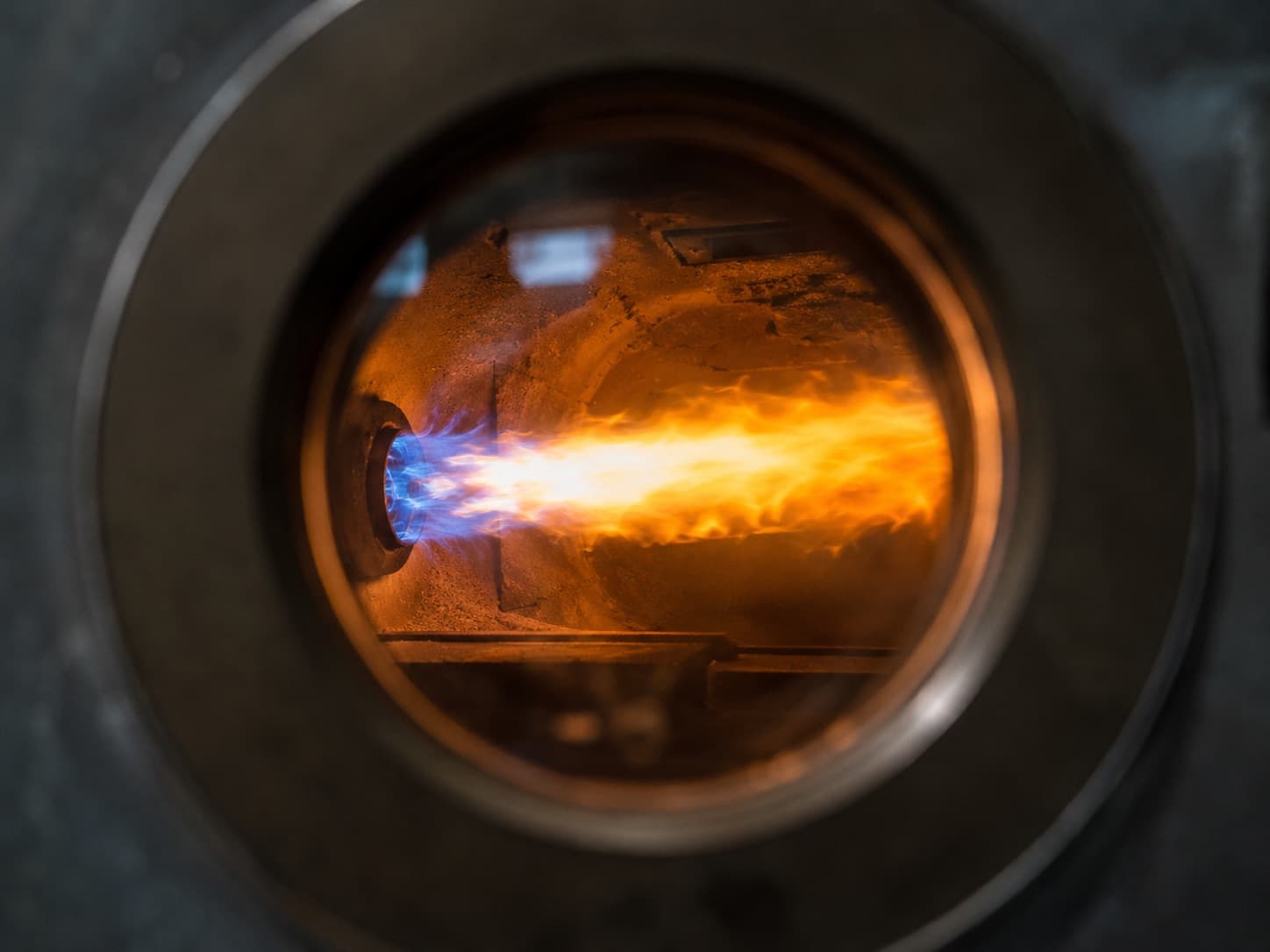
Commissioning is the process of firing a newly installed burner, or one that's undergone a major repair, for the first time under controlled conditions and taking it through every safety and performance test. Unlike scheduled maintenance, commissioning establishes a starting point — it produces the first set of measurements that every subsequent maintenance visit is compared against.
Why is commissioning different from scheduled maintenance?
Scheduled maintenance is about preserving the performance of a system that's already running. Commissioning is confirming a system runs safely and correctly for the first time, or after a major change — everything from installation accuracy to the safety chain's function is tested from scratch. Commissioning after a gas conversion, burner replacement or boiler overhaul is an integral part of the conversion process.
Pre-commissioning checks
Before firing, the following need confirming:
- The burner-to-boiler connection is mechanically correct and sealed
- Electrical connections are correctly made and earthing continuity is confirmed
- The gas or fuel line has been installed to the relevant standards
- The boiler room's ventilation and safety requirements are met — see our boiler room safety guide
Step-by-step commissioning process
1. Visual and mechanical inspection
The burner housing, flange connection, diffuser position and overall installation quality are checked visually and by hand.
2. Electrical and earthing test
Phase-neutral polarity and earthing continuity are measured — reversed polarity is a common error that can later cause ionisation signal problems.
3. Gas/fuel line leak test
Safety valves and connection points are leak-tested. This step cannot be skipped — a leaking valve can later surface as an extraneous light fault.
4. Air pressure switch function test
The fan is run and the pressure value measured; the pressure switch setpoint is set based on this measurement.
5. First firing
The burner is fired for the first time at low fire, under controlled conditions. At this stage every step of the ignition sequence (pre-purge, pre-ignition, safety time) is observed.
6. Safety time and flame signal verification
Using a microammeter, it is confirmed that the flame establishes within the safety time and that the ionisation/photocell signal exceeds the manufacturer's stated threshold.
7. Combustion setting and flue gas measurement at every stage
Using a calibrated analyser, O₂, CO₂, CO and flue gas temperature are measured at every stage the burner can operate at, and adjusted to the manufacturer's target values — see our flue gas analysis guide for the detailed method.
8. Safety chain test
- Flame loss is simulated and fuel cut-off time is measured
- The air pressure switch is disabled to confirm the burner locks out
- The emergency stop button's function is tested
9. Records and the commissioning report
All measurement results, the safety functions tested and the burner's final setting values are documented in a written commissioning report.
Why the commissioning report matters
The commissioning report serves three separate purposes:
- Warranty: manufacturer warranties often require documented proof of correct commissioning.
- Inspection: it is typically the first record requested under statutory obligations.
- A reference for future maintenance: the values measured at every subsequent visit can be compared against the commissioning report's baseline to track trends over time.
Frequently Asked Questions
What's the difference between commissioning and scheduled maintenance?
Commissioning takes a burner through every safety and performance test from scratch, either for the first time or after a major change. Scheduled maintenance preserves the performance of a system that's already running, at regular intervals.
What tests are carried out during commissioning?
Mechanical installation checks, electrical and earthing tests, gas/fuel line leak testing, air pressure switch function testing, first firing, safety time verification, flue gas measurement at every stage, and safety chain testing.
Why is the commissioning report important?
It may be required for manufacturer warranty, it's typically the first record requested at inspection, and it provides the baseline values that subsequent maintenance visits are compared against.
Is commissioning required after a gas conversion?
Yes. It's an integral part of the conversion process — see our [gas conversion guide](/en/blog/natural-gas-conversion-5-critical-points) for details. ---
About Beray Enerji
Beray Enerji is an Istanbul-based burner service company operating across Türkiye, with primary coverage in the Marmara, Thrace and Aegean regions. We provide commissioning for new installations, gas conversions and post-major-repair burners, with written reporting, across all makes and models, backed by a technical team with 30 years of field experience. For a commissioning request, contact us on +90 (000) 000 00 00 or at info@berayenerji.com.
Related services: Burner maintenance · Burner repair service · Contact
References
- EN 676 — Automatic forced draught burners for gaseous fuels
- EN 267 — Automatic forced draught burners for liquid fuels
- EN 161 / EN 1854 / EN 1643 — Gas valves, pressure sensing devices and valve proving systems