
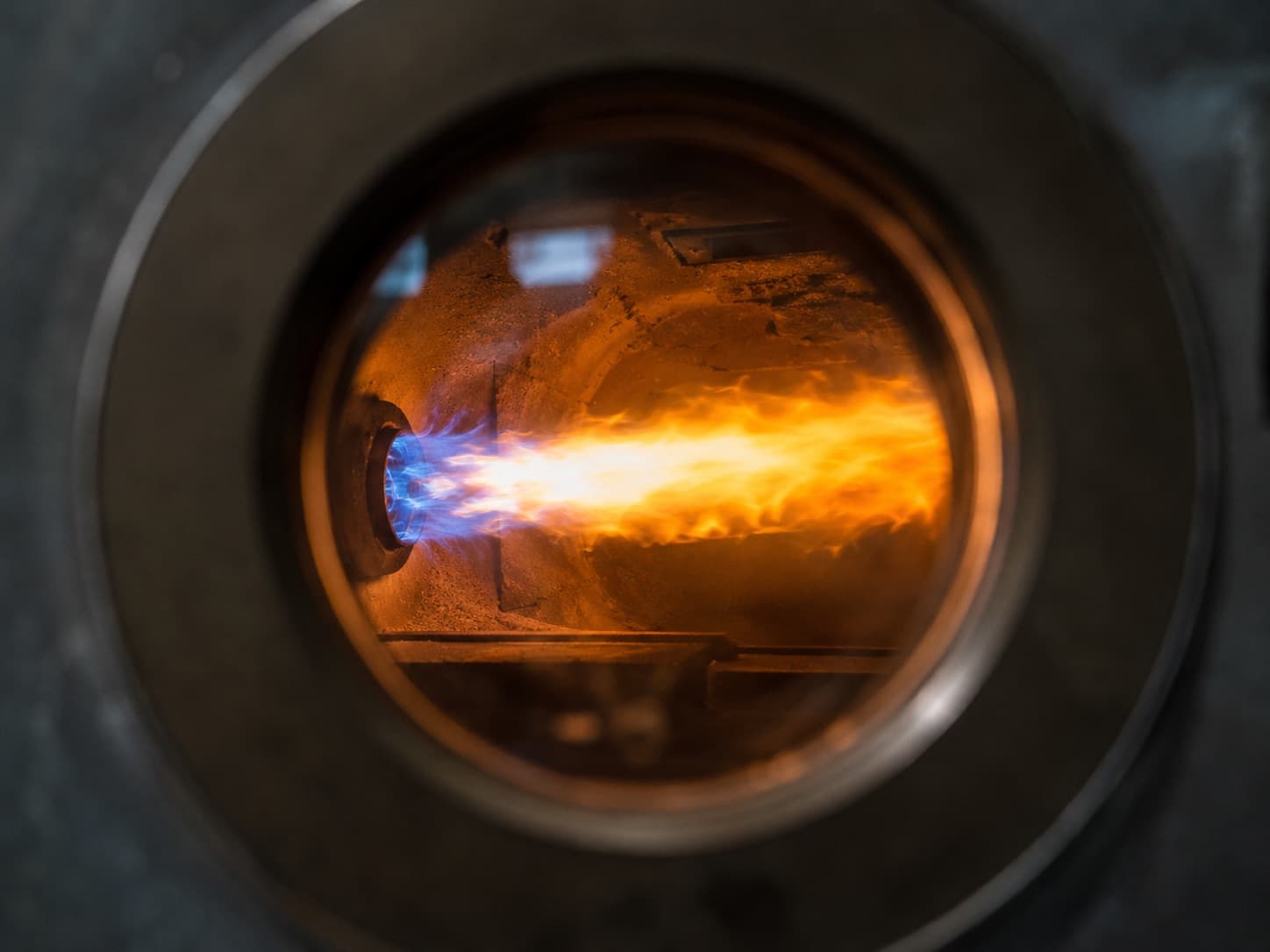
Boiler room safety extends beyond the burner's own safety chain — it is completed by adequate ventilation of the space, a gas detection system, and structural measures. Even a technically flawless burner sits inside a serious safety gap if the plant room is under-ventilated or has no gas detector.
Ventilation: the logic of lower and upper vents
Boiler rooms require two separate ventilation openings, each serving a different function:
- Lower ventilation: supplies the fresh air needed for the burner's combustion. Typically positioned 20–30 cm above floor level or at burner level.
- Upper ventilation: vents any gas leak or unburnt combustion products out of the space. Positioned close to the ceiling.
The vent cross-sectional area is calculated based on the total combustion capacity in the boiler room — the higher the capacity, the larger the required area. This calculation should be done at the design stage.
The most critical rule: the lower and upper ventilation openings must never be blocked. This carries both a poisoning risk and an explosion risk from gas accumulation — stacking storage materials in front of a vent is a common but serious oversight in the field.
Gas detection and emergency stop
- Gas detector: a gas detection device to catch a potential leak early is required in any boiler room using natural gas.
- Emergency stop button: an emergency stop that cuts all electrical equipment in the boiler room (except the alarm) must be located outside the boiler room. If the button sits inside the room, reaching it during an emergency may require entering the hazard — which defeats the point of having it.
Structural safety rules
- Boiler room doors must be built from non-combustible material and must open outward.
- Solid fuel stores, and liquid or gas fuel tanks, should not be located inside the boiler room; if they must be, they should be separated from the boiler/burner area by a wall.
- Boiler room earthing must comply with the applicable electrical earthing regulation.
- Safety rules and equipment operating instructions should be posted visibly in the boiler room.
Flue safety
- The base of the flue must have a cleaning/access hatch with a cross-sectional area of at least 400 cm².
- On gas-fired boilers, a drainage arrangement is required in addition to the cleaning hatch.
- Flue ducts and chimneys should be built from stainless steel.
- Chimneys should extend at least 1 metre above the roof ridge and have a rain cap at the highest point.
- Flue cross-sections should be circular unless there's a specific reason otherwise; an oversized diameter causes condensation and, over time, corrosion.
Boiler room safety checklist
| Check point | What to look for |
|---|---|
| Lower ventilation | Unobstructed, cross-section matched to capacity |
| Upper ventilation | Unobstructed, positioned near the ceiling |
| Gas detector | Present and functional on natural-gas-fired sites |
| Emergency stop | Located outside the boiler room, easily accessible |
| Doors | Non-combustible material, opening outward |
| Fuel storage separation | Solid/liquid/gas fuel storage separated by a wall |
| Earthing | Compliant with regulation, checked regularly |
| Flue cleaning hatch | Present, at least 400 cm² |
| Safety instructions | Posted visibly |
Frequently Asked Questions
Why must boiler room ventilation openings never be blocked?
Blocking the lower or upper ventilation openings both prevents adequate combustion air supply and allows any gas leak to accumulate rather than vent — both are serious safety risks.
Why should the emergency stop be located outside the boiler room?
So that all electrical equipment (except the alarm) can be isolated without needing to enter the boiler room during a hazard, the button needs to sit outside at an easily accessible point.
Is a gas detector mandatory in every natural-gas-fired boiler room?
Yes, under standard boiler room safety practice, an enclosed space using natural gas requires a gas detection device capable of catching a potential leak.
Can solid fuel be stored in a boiler room?
It can, but it must be separated from the boiler/burner section by a wall — it should not sit freely in the same space. ---
About Beray Enerji
Beray Enerji is an Istanbul-based burner service company operating across Türkiye, with primary coverage in the Marmara, Thrace and Aegean regions. We provide boiler room safety assessment, flue gas analysis, scheduled maintenance and fault response across all makes and models, backed by a technical team with 30 years of field experience. For a safety assessment of your plant room, contact us on +90 (000) 000 00 00 or at info@berayenerji.com.
Related services: Burner maintenance · Burner repair service · Contact
References
- Natural Gas Internal Installation Regulation and Technical Specification (Türkiye)
- Electrical Installations Earthing Regulation (Türkiye)
- EN 676 — Automatic forced draught burners for gaseous fuels