
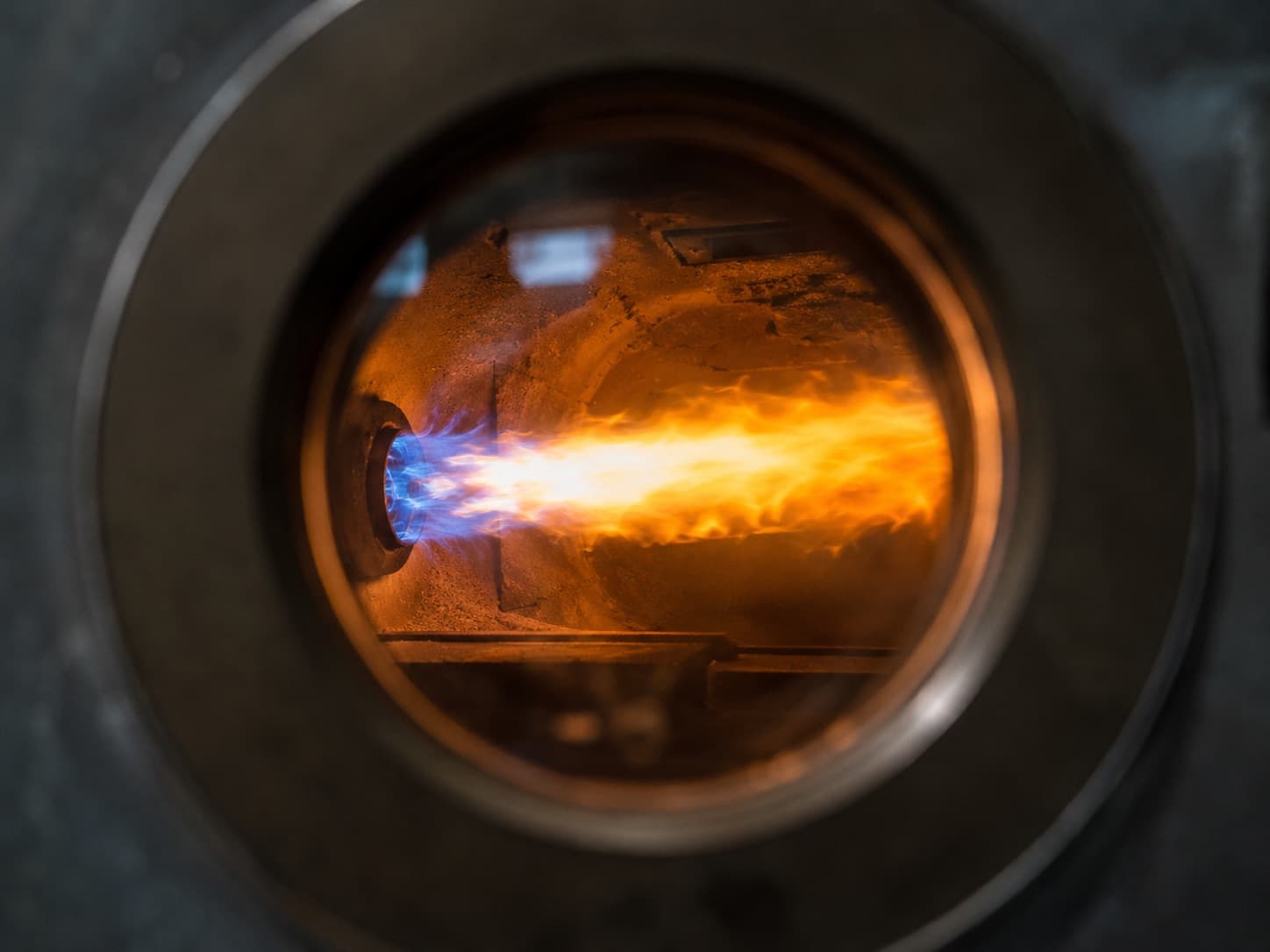
A burner starting and stopping noticeably more often than normal — known in the trade as "short cycling" — is most often caused either by the burner being oversized for the actual load, or by a control or safety component operating marginally. Because it rarely triggers a full safety lockout, it tends to get ignored, but it shortens equipment life and can be an early warning of the next fault.
What counts as "short cycling", versus normal on/off operation?
On single-stage burners, thermostat-controlled on/off operation is normal — it's built into the design. Short cycling is when this happens abnormally often: for example, the burner firing and stopping repeatedly within a few minutes, with run times far shorter than the heat demand would suggest.
6 possible causes
| Cause | Explanation |
|---|---|
| Oversizing | The burner is sized well above the site's actual heat demand, so it heats the space quickly and shuts off almost immediately |
| Thermostat/sensor fault | The room thermostat or outdoor sensor is poorly positioned or faulty, reading the actual temperature incorrectly |
| Marginal ionisation signal | The flame signal is at the margin — sometimes detected, sometimes not, causing unstable operation |
| Gas pressure fluctuation | Network pressure sits close to the minimum; brief dips trip the gas pressure switch and stop the burner |
| Overheat / limit thermostat | Boiler water flow is low (failed pump, an air lock in the system), so the limit thermostat trips prematurely |
| Loose or fouled pressure switch contact | Vibration breaks the contact intermittently, and the burner incorrectly reads "no pressure" |
The hidden cost of short cycling
Short cycling is not just an annoyance:
- Equipment life is shortened. Frequent starting and stopping puts additional electrical and mechanical stress on the motor and electrical components.
- Efficiency loss accumulates. Every firing includes a pre-purge period; repeated too often relative to actual run time, this steadily reduces overall efficiency.
- Fault risk increases. A system cycling frequently can be an early trigger for one of the 7 most common burner faults — particularly where the root cause is a marginal ionisation signal.
When is it an emergency, and when does routine maintenance suffice?
| Situation | Urgency |
|---|---|
| Short cycling accompanied by a safety lockout | High — service should be called promptly |
| Heating performance noticeably reduced, comfort complaints | Medium — scheduled service |
| Only more frequent firing than usual, performance adequate | Planned — can be assessed at next service |
Frequently Asked Questions
Is it normal for a burner to keep starting and stopping?
Thermostat-controlled on/off operation is normal on single-stage burners, but this happening abnormally often — for example several times within a few minutes — is not, and always has a cause.
What is the most common cause of short cycling?
The two most common causes are the burner being oversized relative to the site's demand, and a marginal flame signal. Both can be distinguished through a technical inspection.
Does short cycling damage a burner?
Yes, over time. Frequent starting and stopping places additional load on the motor and electrical components and raises fault risk; the repeated pre-purge period at every firing also reduces overall efficiency.
Will short cycling resolve on its own?
No. It continues until the underlying cause — sizing, sensor, gas pressure, pressure switch, etc. — is corrected. ---
About Beray Enerji
Beray Enerji is an Istanbul-based burner service company operating across Türkiye, with primary coverage in the Marmara, Thrace and Aegean regions. We provide short-cycling diagnosis, capacity assessment and fault repair for gas, oil and dual-fuel burners of all makes and models, backed by a technical team with 30 years of field experience. For service, contact us on +90 (000) 000 00 00 or at info@berayenerji.com.
Related services: Burner repair service · Burner maintenance · Contact
References
- EN 676 — Automatic forced draught burners for gaseous fuels
- EN 267 — Automatic forced draught burners for liquid fuels